
Kennington Park: A Little Green Space With a Lot of History
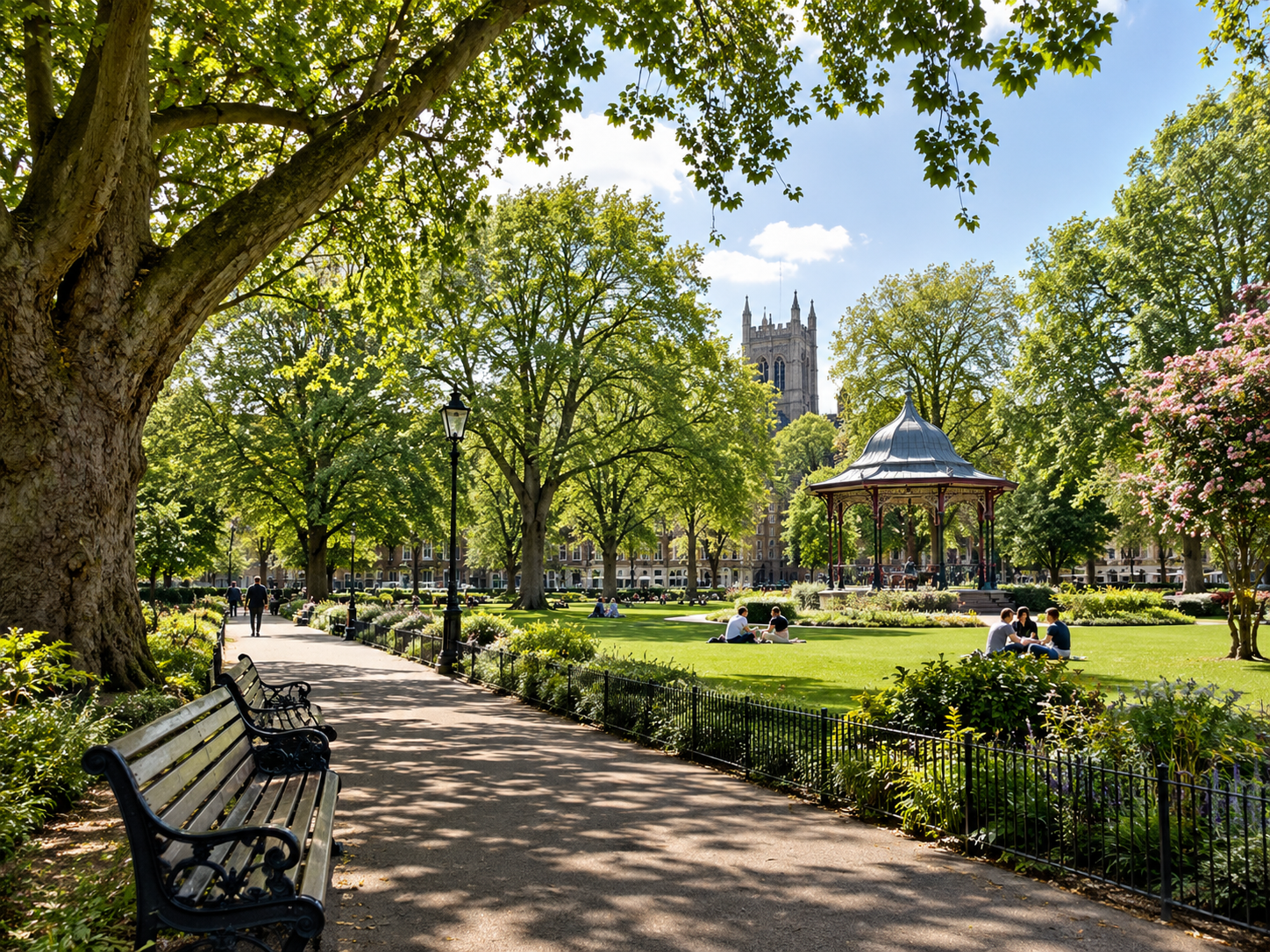
From Victorian gardens and peaceful afternoon walks to political protests that helped shape British democracy, Kennington Park is much more than somewhere to walk the dog. It's one of SE11's most interesting landmarks — and a wonderful place to have on your doorstep.
One of the things I enjoy most about living in Kennington is just how much there is within walking distance. We're remarkably close to central London, yet there are still plenty of places where you can escape the traffic, slow down and enjoy a bit of greenery.
Kennington Park is a perfect example.
Sitting between Kennington, Oval and Camberwell New Road, it's one of those places that makes this part of London feel like a proper neighbourhood rather than simply somewhere convenient for commuting.
And while it's easy to appreciate the lawns, mature trees and beautiful flower gardens, there's a rather fascinating story behind how the park came to be.
From Kennington Common to the Fight for Democracy
Long before it became the park we know today, this was Kennington Common, an open space used for everything from cricket matches and public gatherings to political demonstrations.
Its most famous moment came on 10 April 1848, when tens of thousands of Chartists gathered here to demand democratic reform.
The Chartists were campaigning for changes that now seem fundamental to British democracy, including wider voting rights, secret ballots and payment for Members of Parliament.
Their plan was to march from Kennington Common to Westminster and present a petition to Parliament.
The government, however, was rather less enthusiastic.
With revolutions taking place across Europe, the authorities feared the gathering could lead to an uprising. Thousands of special constables were recruited, troops were deployed and the bridges across the Thames were heavily guarded.
Ultimately, the planned procession didn't go ahead, and the petition was transported to Parliament separately.
It's quite extraordinary to think that a place where people now sit having picnics was once at the centre of such an important moment in Britain's political history.
Among those involved was William Cuffay, a Black British tailor and prominent Chartist organiser whose story has increasingly received the recognition it deserves.
How Kennington Park Was Created
Following the Chartist demonstrations, Kennington Common underwent a significant transformation.
In 1852, the land was enclosed and work began to turn it into a landscaped public park, which officially opened in 1854.
It was one of London's early public parks, designed to provide a more peaceful and orderly recreational space for the growing urban population.
Of course, there was a political dimension to this too. Turning the common into a fenced park also made it easier to control the large public gatherings for which the area had become famous.
Over the following decades, the park developed many of the features that still give it its character today: tree-lined paths, ornamental planting, fountains and recreational spaces.
One particularly interesting survivor is the Prince Consort Lodge, a model dwelling originally exhibited at the Great Exhibition of 1851.
Associated with Prince Albert's efforts to improve housing conditions for working families, it was subsequently moved to Kennington Park.
It's a lovely little architectural connection between the park and Victorian London's wider history.
The Flower Garden Is a Hidden Gem
If there's one area of Kennington Park worth seeking out, it's the Old English Flower Garden.
Originally created in 1931, this formal garden is quite different from the park's larger open lawns.
With its carefully arranged planting, pathways and more intimate atmosphere, it feels like a little garden tucked away from the rest of London.
The garden has undergone significant restoration, supported by the National Lottery Heritage Fund and Lambeth Council, helping to preserve one of the park's most attractive historic features.
It's particularly lovely when the flowers are in bloom, but there's something rather charming about it throughout the changing seasons.
And that's one of the things I appreciate about Kennington generally. You don't always have to go far or make elaborate plans to find somewhere interesting. Sometimes it's simply a matter of taking a different path through somewhere you've walked past hundreds of times.
More Than Somewhere to Sit in the Sunshine
The park is surprisingly varied in what it offers.
There are open lawns for relaxing, beautiful mature trees providing shade in summer and plenty of paths for a leisurely walk.
But it's also a genuinely useful recreational space, with tennis courts, football and netball facilities, basketball, table tennis, outdoor fitness equipment and children's play areas.
The adjoining Kennington Park Extension provides additional space for cricket and other grass sports.
There's also a café, making the park an easy destination for a coffee rather than just somewhere to pass through.
And for those who enjoy a bit of urban nature, the park is home to Bee Urban, an organisation focused on beekeeping, pollinators and environmental education.
It's a particularly nice reminder that even in a busy part of London, there's room for wildlife and biodiversity.
Kennington Park has received both Green Flag and Green Heritage recognition, which reflects not only the quality of the space but also the efforts that go into maintaining and preserving it.
Festivals, Community Events and Local Life
One of the nicest things about Kennington Park is that it isn't simply a historic attraction. It's still very much part of the local community.
The park regularly provides a setting for community activities, volunteering, gardening and local events, with the Friends of Kennington Park playing an important role in looking after and promoting the space.
A particularly good example is the Kennington Park Festival.
The free community festival has brought together local residents for live music, dance, cultural performances, creative workshops, wellbeing activities and family entertainment.
The July 2026 event marked its sixth year, with everything from arts and crafts to drumming workshops and activities for children.
The park has also hosted historical walks and heritage events exploring its extraordinary past, including the Chartist movement and the people who helped shape the area.
It's this combination of history and everyday community life that makes the park interesting.
It isn't somewhere preserved purely for tourists. It's somewhere local people still actively use, enjoy and contribute to.
For upcoming events and volunteering opportunities, the Friends of Kennington Park website is well worth keeping an eye on.
A Park With a More Serious History Too
Not all of Kennington Park's history is quite so cheerful.
During the Second World War, an air raid shelter in the park suffered a devastating direct hit in October 1940, killing more than 100 people.
Today, a memorial commemorates those who lost their lives.
It's a poignant reminder of how much history exists beneath the surface of places we might otherwise take for granted.
The park's story stretches from public executions and Victorian political demonstrations to wartime tragedy, community activism and the everyday enjoyment of thousands of Londoners.
There can't be many neighbourhood parks with quite such a varied past.
Why Green Spaces Matter When Buying a Home
When people start looking for a property, understandably the initial focus tends to be on the home itself.
How many bedrooms does it have? What's the layout like? How far is the nearest station? Is there outside space?
But I think the surroundings are every bit as important.
One of the advantages of living around Kennington and Oval is that you have so much within a relatively small area.
You can enjoy the restaurants and pubs around Kennington, walk towards Vauxhall and the Thames, or head into Kennington Park for some greenery without having to get on a train or make a day of it.
For anyone buying an apartment without a private garden, having a substantial and attractive public park nearby can be particularly valuable.
And this is exactly why I like including local places in our property marketing.
It's all very well telling someone that a property is conveniently located, but I'd much rather show them what living in the area actually looks like.
Kennington Park, like The White Bear and so many of the area's independent cafés and neighbourhood favourites, is part of what makes SE11 such an enjoyable place to call home.
It's not just about buying a property in Kennington. It's about enjoying Kennington once you've moved in.
Visiting Kennington Park
You'll find Kennington Park on Kennington Park Road, London SE11 4BE, conveniently located between Kennington and Oval Underground stations.
The park is normally open from 7.30am until approximately 15 minutes before sunset, with opening times varying seasonally.
There's no admission charge, and with its gardens, historic features, sporting facilities and café, there's plenty of reason to visit throughout the year.
For more information about the park and upcoming community activities, visit Friends of Kennington Park.
